
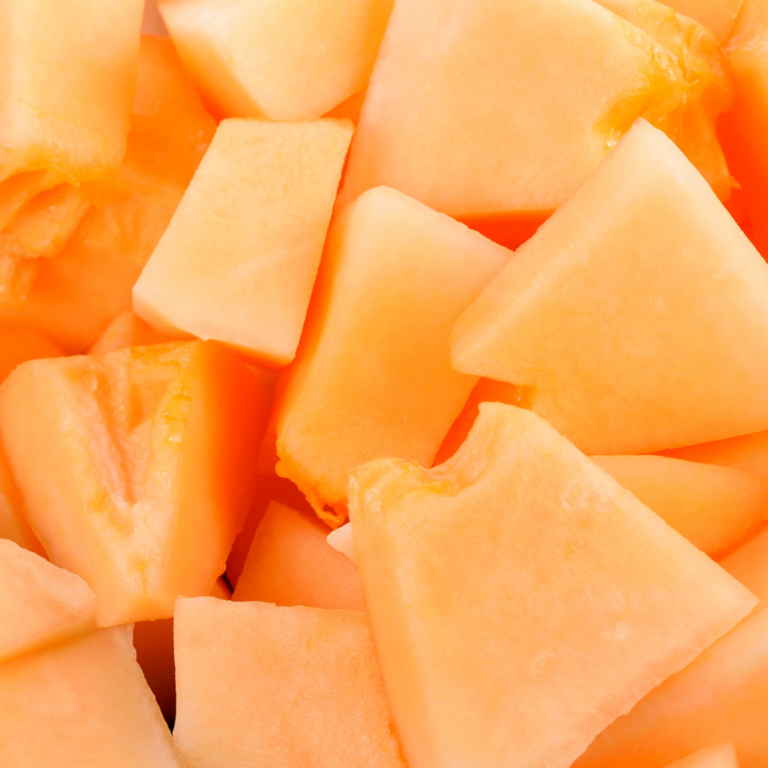
Pop quiz: Why is cantaloupe orange on the inside?
A) It’s overflowing with Vitamin C
B) Its close relation to pumpkins
C) It’s packed with beta-carotene
D) It sunbathes all summer long
Answer: It’s packed with beta-carotene
That sweet orange color comes from beta-carotene, an antioxidant that gives fruits and vegetables an orange and yellow pigment. And here’s the really great part: Our bodies convert beta-carotene into vitamin A, a nutrient that helps support healthy vision and the immune system. Who doesn’t want a second serving of that?
Part of the Gourd Family
Pumpkins, squash and melons – yes, they are all related. Melons are in the gourd family alongside the many squash varieties that start popping up in the fall.
Melons in Minnesota grow during the warm summer weather, with harvest ready in August and September, but they’re still a common sight on trays in early fall. Their refreshing flavor makes them a welcome addition to school meals as the season changes.
Minnesota’s Melon Lineup
Minnesota brings several kinds of melons to the table, each with its own look, flavor and personality.
Cantaloupe: Recognizable by its netted-looking outer skin and sweet, orange flesh. It has a mild sweet flavor.
Honeydew: Has smooth, creamy yellow outer skin and light green flesh. Can be very sweet at the right ripeness.
Watermelon: Known for its smooth, green rind and juicy flesh, which can be red, yellow or orange. It is especially refreshing and has a higher water content than the others.
The Nutritional Perks
Cantaloupe brings more than an orange spark to meals. It’s a naturally nutrient-rich fruit that offers several benefits for growing kids and adults alike.
- Vitamin A: Thanks to the conversion of beta-carotene into Vitamin A, cantaloupe is an excellent source of this nutrient. Vitamin A helps support skin, bone, eye health and the immune system.
- Vitamin C: Cantaloupe is also an excellent source of vitamin C, further helping support the immune system and overall health. With twice as much vitamin C as honeydew, just one cup of cantaloupe provides about 100% of the daily value of vitamin C!
- More good stuff: Cantaloupe is low in carbohydrates and also provides potassium, folate and fiber. Plus, its phytonutrients help with hydration.
Fun Melon Facts to Share with Students
-
 There are more than 38 types of melons worldwide.
-
 On average, 10-15 bee visits are needed to pollinate large melons.
-
 Cantaloupes are also called muskmelon, netted melon, and rock melon.
 More on muskmelons… All cantaloupes are muskmelons, but not all muskmelons are cantaloupes. Cantaloupes are the most popular type of muskmelon.
 The most expensive melons in the world are in Japan. The Yurabi King melons are grown in volcanic ash on the island of Hokkaido and can cost up to $10,000.
 Melons on the Tray
When it comes to serving melons, simple is best!
We serve cantaloupe, honeydew and watermelon sliced or diced on their own or combined into a colorful melon medley.
It’s a refreshing and a-peel-ing way to add fruit, color and a punch of nutrition to the menu.
Resources:
- https://sites.google.com/farmtoearlycaremn.org/mnharvestofthemonth/foods/melons?authuser=0
- https://docs.google.com/presentation/d/16bdL6b6APmTRt6C85Bkf8BscOBUCMwhc8pXZEZcSMOM/edit?slide=id.g1bb93a02668_0_1#slide=id.g1bb93a02668_0_1
- https://docs.google.com/document/d/1DPGSzpKvXaMevmaLc45H-ohsaJzVVmNXwq6LJHWbtR4/edit?tab=t.0
- https://kids.britannica.com/students/article/melon/275778
- https://www.finedininglovers.com/explore/articles/melons-z-26-fun-facts-about-melons
- https://www.mayoclinichealthsystem.org/hometown-health/speaking-of-health/melons-pack-a-nutritional-punch
- https://www.webmd.com/food-recipes/cantaloupe-health-benefits
- https://franklin.ces.ncsu.edu/news/nutritional-benefits-of-cantaloupe/