
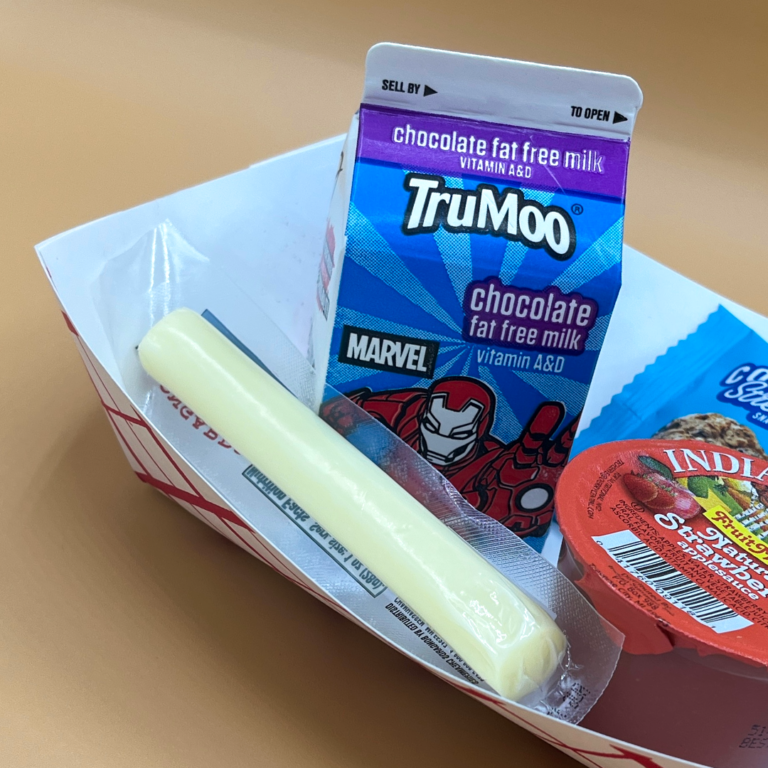
Pop quiz: More than one-third of the milk produced in the U.S. is…
A) Made into chocolate milk
B) Turned into cheese
C) Frozen
D) Thrown away
Hint: Cheese lovers, this one’s for you!
Answer: Turned into cheese
That’s right – more than one-third of all milk produced in the United States is used to make cheese! From cheddar on breakfast sandwiches to mozzarella on lunch favorites like pizza to snackable grab-and-go cheese sticks, cheese is one of the most versatile items on the menu.
From Milk to Cheese: A Tasty Transformation
Cheese is believed to have been first discovered by accident when milk was stored in containers made from animal stomachs. A natural enzyme called rennet caused the milk to separate into curds and whey, creating the very first cheese.
Fast forward to school meals today, cheese is now made using a more precise process, but the basics are still the same. Milk is carefully processed, tested for safety and transformed into hundreds of delicious varieties – from soft and creamy to hard and sliceable.
How Dairy (and Cheese!) Play a Big Role in School Meals
There’s a reason why dairy shows up in many school meals. Dairy foods like milk, cheese, and yogurt don’t just taste great – they’re packed with nutrition. Together, they provide nine essential nutrients, including:
- Calcium – builds strong bones
- Protein – helps kids stay full, focused, and energized
- Vitamin D – helps the body absorb calcium
- Potassium – supports healthy blood pressure
- Phosphorus, Vitamins A and B12, riboflavin and niacin
That’s why dairy is a key component of school meal programs. It helps fuel both bodies and minds.
Fun Dairy Facts to Share with Students
- A single dairy cow can produce 6-7 gallons of milk per day. (That’s a LOT of milk for cereal)
- The average dairy cow eats about 50 pounds of food daily to fuel that milk production
- Minnesota ranks 6th in U.S. cheese production
Menu Spotlight: Cheese Sticks
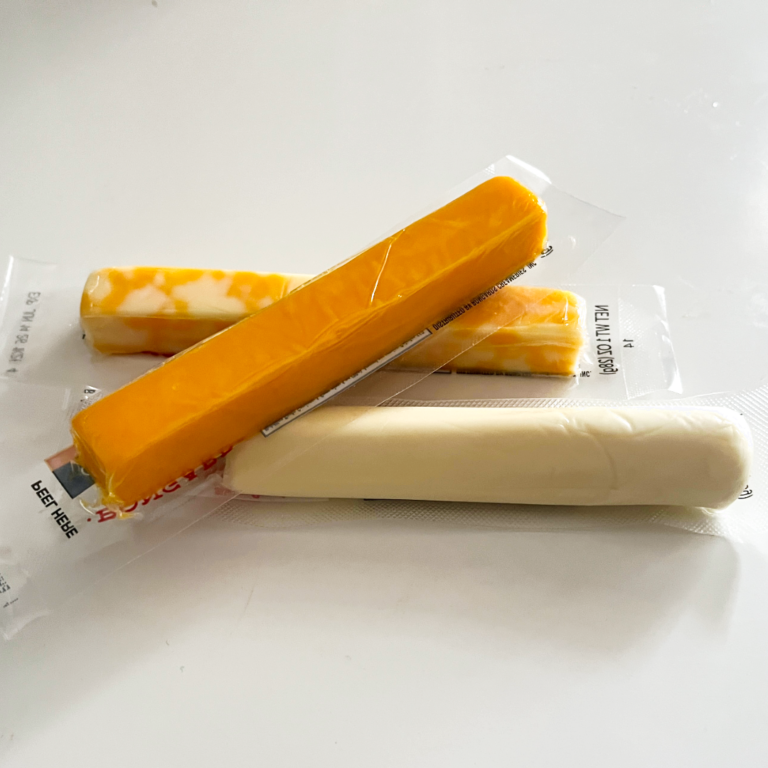 A student favorite that checks all the boxes: cheese sticks.
- Packed with protein and calcium to support growing kids
- Easy to serve and easy to eat
- A familiar, kid-approved option that helps reduce food waste
And we offer three of them!
- Mozzarella cheese
- Cheddar cheese
- Marble jack cheese
Whether served as part of a meal or a grab-and-go snack, cheese sticks are a simple way to bring nutrition and enjoyment together on the school menu.
Resources:
- https://sites.google.com/umn.edu/mnharvestofthemonth/foods/dairy?authuser=0
- https://docs.google.com/presentation/d/14prQZb9TKBOWB8SJe3Ob5yhjZ1cbohI5TLFQJJjt3P0/edit?slide=id.g1bb93a02668_0_1#slide=id.g1bb93a02668_0_1
- https://minnesota.agclassroom.org/matrix/lessons/805/
- https://nutritionsource.hsph.harvard.edu/dairy/